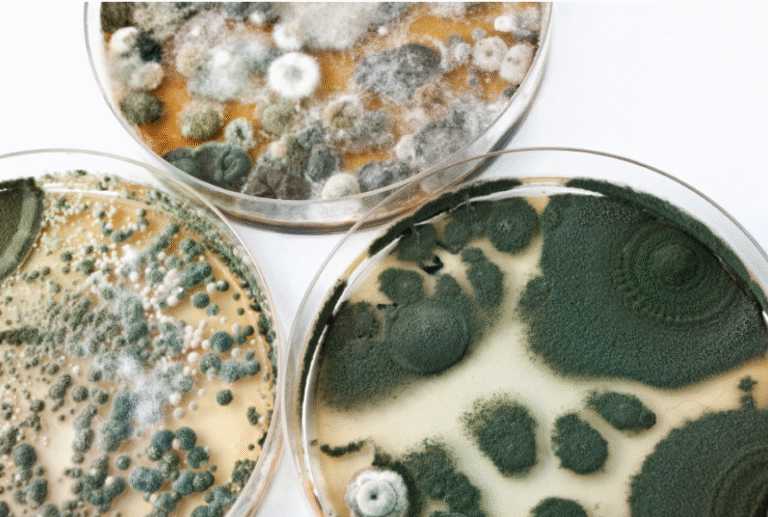
What is toxic mold ?
Mold is a type of fungus and there are more than 300 types of mold known in existence. Some molds are normal in our environment and are not generally a health concern, while other molds are even safe to eat like the mold found in blue cheese for example. But some molds can be highly toxic to our health and are associated and known to cause health issues including chronic illness, permanent organ damage, and can even lead to death. Just like how all mushrooms are not the same, molds are not all the same and can not be classified as all toxic or all safe.
Out of these 300 molds, only a couple dozen types of molds are known to impact your health. These molds are found in our home environment and usually begin due to water damage, previous water damage, or overall humid conditions in the home over time.
Mold spores are microscopic and the toxic type releases toxic poisons into the air called mycotoxins. These mycotoxins are known to lower your immune function and can be highly damaging to your health. They are even associated with specific organ damage and health conditions, they are invisible, odorless, and highly toxic.
Each mold may release several mycotoxins so for example if you have one mold it may release three mycotoxins or up to five in some cases.
In addition to mycotoxins toxic mold spores have been known to get into the body and colonize tissues pumping out mycotoxins into the blood, body, lungs. and sinuses. So this is the reason mold in your home can be so destructive to your health since some molds can not only act as a pathogen but also release poison in to your body body over time.
In addition to poisoning your body on a continual basis by breathing in spores and mycotoxins, mold mycotoxins lower immune function. For this reason mold toxicity compounds weaker areas in your body that you may already have an issue. So while your body is trying hard to fight off breathing in poison, killing mold spores that are inhaled and get in through your skin, any already chronic issues can get worse. This is why health issues can compound with mold exposure and seem to never really get better.
Main areas that may be affected by mold are the brain, liver, lungs, sinuses, and kidneys.
One Parkinson’s patient of Dr. Jill Crista was struggling with Parkisons and dementia symtoms and mold was discovered in the patients’ sinuses.
The patient was treated for mold and sinuses were also treated and the patient fully recovered completely reversing his symtoms of Parkinson’s and dementia.
This is how destructive mold can be and how important it is to find it as early as possible in your journey to recover your health because untreated it may just continue to get worse.
Many Lyme doctors after treating Lyme patients for decades are just now realizing the role of mold in Lyme disease that doesn’t respond to treatment.
The symtoms are many times the same and many have found that after treating mold and removing the patient from the mold environment, symptoms either disappear or respond more easily to treatment.
How do I know if I have toxic mold in my home ?
While some people see mold growing on walls or know of previous flooding and in theses cases it’s obvious, not all mold is visible. Mold likes to hide in the attic, in basements, behind appliances, in walls and under flooring and even behind walls.
Since mold spores and the mycotoxins (poisons) they produce are very small, they are invisible in the air. These spores and mycotoxins get in the air, in dust, on surfaces, in clothing, bedding, and furniture. Then you breathe them in, get them in your body through your skin, eyes, and food. So many people find they have mold issues only after testing their home.
Also since past water damage can also release mold spores and mycotoxins into the air on a continual basis, you don’t even have to have an active water issue in the home to be affected by mold in your home.
Testing your home for mold and mycotoxin levels can give you an understanding of what you are being exposed to in your home. This is the only way to know for sure what you are being exposed to and at what levels.
Your symptoms may also give you a clue.
You may have all or none of these symtoms and still have a mold issue affecting your health.
Most commonly what I see is people that have a lot of sumtoms like 20 + that don’t get better or much better over time with or without treatment.
Allergy, lung, and breathing issues
Sleeping issues
Depression, anxiety, neurological issues
Issues affecting thyroid, kidneys, liver or lungs
Worsening of overall health over time either quick onset or slow decline.
Gut issues
Since different mold and mycotoxins affect different areas of your body and your body’s ability to fight infection, when people are poisoned by mold in their environment they may experience worsening of health issues.
Sometimes people that have 20+ unexplained health symtoms and issues that don’t ever seem to get better, many find mold exposure to be at the root cause of their illness and once addressed some find rapid healing in a matter of months. But it’s important to note some mold can cause permanent organ damage.
Mold and mycotoxins can act like a systemic poison in the body. Each mold and mycotoxin have been linked to specific conditions and specific organ dysfunction.
TEST ERMI